
Features
Accra under siege: Monday’s dawn rain swallows streets and sparks fear
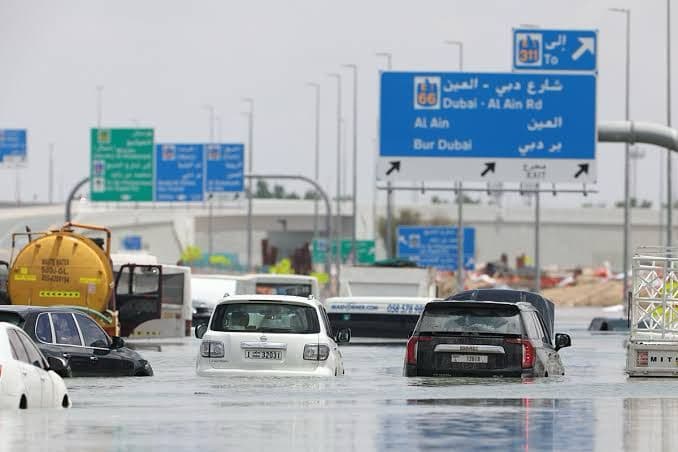
Accra’s Monday, June 29, began not with ease but with destruction. Around 3:00 a.m. the sky broke open, and for nine unbroken hours, the city sat under a heavy, unforgiving rain that did not let up until past noon. By dawn, low-lying areas were already gasping for air as water climbed into homes, shops, and classrooms. The worst-hit places included Circle and its surrounding factory enclave, Kaneshie, Adjei-Kojo, Weija, and parts of Tema’s New Town, where gutters overflowed and roads vanished under brown, fast-moving water. In Circle, the situation turned even more frightening when a factory caught fire amid the flood, sending smoke and panic through a neighbourhood that was already struggling to stay on its feet. The Ghana Meteorological Agency noted that the intensity and duration of the downpour overwhelmed drains choked by dry-season waste, leaving the capital with nowhere for the water to go.
For the people caught in it, Monday felt less like a rainy day and more like a warning. Students who set out for school at dawn found themselves turning back, shoes in hand, as buses stalled at flooded intersections, and parents waited anxiously by gates that led to submerged streets. Traders at Kaneshie watched water sweep through stalls, carrying away goods they had arranged since the night before. In Adjei-Kojo and Weija, families scooped water out of living rooms with buckets while children clung to older siblings, afraid of the dark, rushing current outside. The fire at the Circle factory added a new layer of dread because when water and fire meet in a crowded area, fear travels faster than the rain.
As the downpour continued, Interior Minister Honourable Muntaka Mohammed addressed the nation by mid-morning. His message was urgent and clear: stay indoors if you are already home, and avoid moving through floodwater unless it is absolutely necessary. He warned that the rain was not stopping and that further accidents were likely if people tried to “beat” the water. The Minister’s words carried the weight of what was happening in real time on Accra’s streets, and for many residents, it was the first time all year that an official warning matched the fear they could see from their windows.
Staying indoors is only one part of surviving a season like this. It also means understanding what floodwater hides, which is why the Minister’s caution matters. Moving water can cover open gutters, loose manholes, and live electrical cables, and one wrong step can end in tragedy. Families should keep phones charged, flashlights and basic medicines within reach, and important documents in waterproof bags because a flood can turn a normal morning into an evacuation within minutes. Landlords and tenants must clear drains around their compounds and refuse the habit of dumping plastic in gutters since a single blockage can send water into several homes. Schools and workplaces should heed weather alerts early because a delayed class or shift is easier to explain than a missing loved one.
Monday, June 29, will be remembered in Accra not just for the rain but for what it revealed about how quickly a city can be humbled by water. The exhaustion on students’ faces, the silence in markets that should have been busy, and the smoke over Circle tell a story that numbers alone cannot. If this season is to be different, it will be because we listened when the Minister said to stay safe, because we cleared a drain before the clouds gathered, and because we chose caution over convenience while the rain was still falling.
Related Stories & Campus Highlights
View All in Features →
Features
Sep 9, 2026 3 min read
Survivors don't wear capes: they just don't quit
Survival is not merely about staying alive; it is the courage to keep moving forward when life presents its greatest challenges. Every day, people fac...
Features
Sep 8, 2026 3 min read
Where challenges become stepping stones: a semester of promise
The reopening of school marks the beginning of another exciting academic journey filled with fresh opportunities and new challenges. Campuses that wer...

Features
Sep 6, 2026 3 min read
The library that travels
Have you ever heard of Logos Hope? Logos Hope is a ship that travels to different countries, filled with books. If you are someone who loves books, t...

Features
Aug 24, 2026 3 min read
Balancing books and bills: the struggles of working students
By 6:15 a.m., Abena Owusu-Ansah is on a trotro down the Spintex road, textbook on her knee, name tag from the supermarket tucked in her bag. Lectures ...