
Academics
The rising cost of tuition and its impact on university enrollment
The rising cost of university tuition is a pressing issue affecting students and families worldwide. In Ghana and beyond, students face increasing fee schedules, making higher education less affordable and more stressful to pursue. This problem disproportionately affects low- and middle-income students, limiting their access to higher education.
The rising cost of tuition is not just a financial issue; it affects the future of young people and the development of nations as a whole. One of the main causes of rising tuition fees is the decline in government funding to public universities.
In many countries, including Ghana, governments have reduced the amount of money they allocate to higher education, forcing universities to depend more on student fees to run their operations. For instance, in Ghana, students in public universities like the University of Ghana, University of Professional Studies, Accra, and the University of Cape Coast have seen tuition and residential fees increase several times over the past few years.
The management of these institutions often explains that the increases are necessary to cover operational costs, especially as prices of electricity, water, and other supplies keep rising. A similar trend can be observed in Nigeria, where some federal universities recently announced significant increases in fees, causing protests among students.
Even in developed countries like the United States, the cost of attending university has grown rapidly, leaving many students with huge debts after graduation. According to data from the College Board, the average cost of tuition at a public university in the U.S. has more than doubled in the past two decades.
The effects of rising tuition fees are far-reaching. Many students are unable to enroll or are forced to defer their admission due to financial constraints. Some resort to student loans or part-time jobs, while others give up on their academic dreams altogether.
In Ghana, for example, some students have had to rely on student loans or part-time jobs to pay their fees, but even that is not always enough. The Student Loan Trust Fund (SLTF) has helped some students, but delays in disbursement often cause stress and uncertainty.
To address this problem, governments must take deliberate steps to make higher education more affordable. Increasing public funding for universities would help reduce their dependence on tuition fees. More scholarship schemes should be introduced to support students from low-income backgrounds. Universities should also explore innovative cost-management strategies and improve transparency in how student fees are used.
Efficient student loan systems with flexible repayment plans are also crucial. Governments, universities, and stakeholders must work together to make higher education affordable and accessible to all. Education is a right, not a privilege, and it's time we prioritize it.
Related Stories & Campus Highlights
View All in Academics →
Academics
Feb 26, 2026 3 min read
UPSA@60 strengthens ties with CIMA-Ghana ahead of IPS relaunch
The UPSA@60 Anniversary Planning Committee has paid a courtesy call on the Chartered Institute of Management Accountants (CIMA)-Ghana as part of stake...

Academics
Feb 25, 2026 3 min read
Upsa@60 strengthens strategic ties with CITG ahead of diamond jubilee
The UPSA@60 Anniversary Planning Committee paid a courtesy visit to the Chartered Institute of Taxation Ghana (CITG) on Tuesday, February 24, 2026, as...

Academics
Feb 25, 2026 3 min read
UPSA champions cultural identity through National Fugu Day celebration
The University of Professional Studies, Accra (UPSA) proudly joined the national observance of National Fugu Day, reaffirming its commitment to promot...
Academics
Feb 24, 2026 3 min read
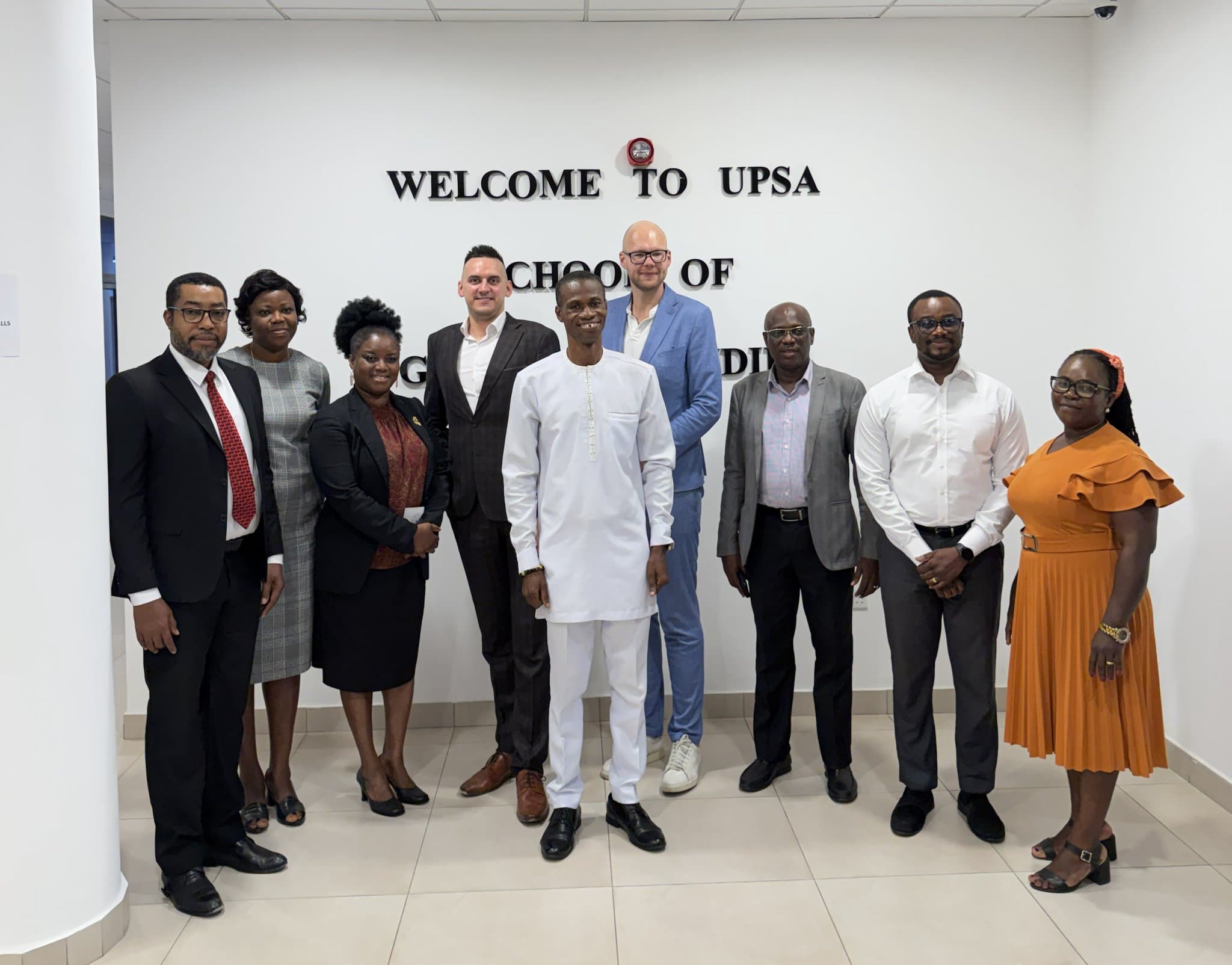
UPSA strengthens international collaboration through Erasmus+ staff mobility engagement with EKA University of Applied Sciences
The University of Professional Studies, Accra (UPSA), has today welcomed a delegation from EKA University of Applied Sciences, Latvia, for a one-week ...