
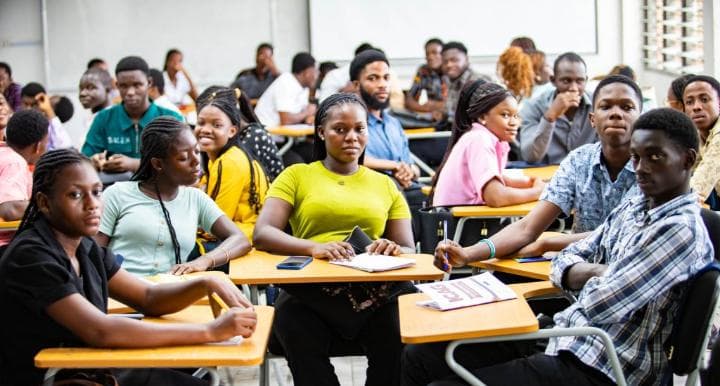
If you're a student at UPSA or an alumni, you know there are three things you can not escape: group chats, assignment deadlines, and the legendary class presentation. It doesn’t matter whether you’re a fresher still figuring out the campus layout or a seasoned level 400 student who knows exactly which lecture halls have the best Wi-Fi connection, presentations will find you. And when they do, the experience is always memorable.
The moment the lecturer says “group presentation”. It usually starts innocently. The lecturer walks in, places their laptop on the desk, and says the sentence that instantly changes the mood of the entire room, “Next week, we will have group presentations.” Suddenly, the lecture hall transforms. Some students start calculating which friends they can survive working with. Others begin silently praying they won’t be grouped with that one person who disappears until the night before submission. And of course, there’s always that one enthusiastic student who says, “Sir, can my group go first?” Everyone else in the class immediately labels that person as too serious (over sabi).
Every UPSA presentation begins the same way: a brand new WhatsApp group. The group name is usually in relation to the course. The first 24 hours are full of motivation:
“Guys let’s take this seriously.”
“Everyone should do research.”
“Let’s meet tomorrow.”
After two days, the energy drops. Some of the members are doing all the work, and some are always saying “I’ll add mine soon.” Others are just reacting to messages with emojis or not replying at all. Yet somehow… the work still gets done.
This is when the real UPSA magic happens. The slides are still being edited at 2:13 am. Someone suddenly suggests changing the entire design theme. Another member discovers the lecturer “likes more analysis.” At this point, panic mode activates. You’ll hear messages like: “Guys add references!”, “Check slide 8!”, “Who is presenting the conclusion?”, “Wait… we even have a conclusion??” Sleep becomes optional.
When the big moment arrives, three types of students appear.
The Confident Speaker
This person speaks like they’re presenting at an international conference. Strong voice, eye contact, perfect explanations. Meanwhile, the rest of the group is thinking: Where did they get this confidence from?
The Slide Reader
You know this one, all right, soooooooo: “Good morning, class. As you can see on the slide… the definition… of communication … is…” They proceed to read every single word on the slide and, in most cases, on their phones.
The Nervous Presenter
They start with: “Good morning everyone… um… today… we are here to… um…” Their friends in the audience start nodding aggressively to give them moral support.
But, let’s be honest. During presentations, the audience is doing at least three things: pretending to listen, working on assignments for another course, and waiting nervously for their own turn. But the moment a presenter says something funny or makes a mistake, suddenly everyone is paying attention.
Just when the group thinks they have survived… the lecturer says, “Thank you. Any questions?” Then silence. Absolute silence. No student wants to ask a question because they know their colleagues might turn the question back on them. Then the lecturer asks their own question, the one nobody in the group prepared for. You can literally see the group members slowly turning their heads toward the “smartest” person in the group.
Yet somehow… it’s worth it. Despite the stress, the late nights, and the chaotic group chats, UPSA presentations do something important. They teach students how to speak in front of people, how to work in teams, and how to explain ideas clearly. These are skills that will matter long after graduation. Plus, the shared struggle creates memories. Years later, UPSA graduates may forget some lectures… but they will never forget the presentations where everything almost went wrong but somehow worked out. Because at UPSA, presentations are not just assignments; they are a rite of passage.
NC
Noel Mawuedem Coffie
editor
Voice of UPSA editorial team member.
Loading discussion...
Related Stories & Campus Highlights
View All in Features →
Features
Sep 9, 2026 3 min read
Survivors don't wear capes: they just don't quit
Survival is not merely about staying alive; it is the courage to keep moving forward when life presents its greatest challenges. Every day, people fac...
Features
Sep 8, 2026 3 min read
Where challenges become stepping stones: a semester of promise
The reopening of school marks the beginning of another exciting academic journey filled with fresh opportunities and new challenges. Campuses that wer...

Features
Sep 6, 2026 3 min read
The library that travels
Have you ever heard of Logos Hope? Logos Hope is a ship that travels to different countries, filled with books. If you are someone who loves books, t...
Features
Aug 24, 2026 3 min read
Balancing books and bills: the struggles of working students
By 6:15 a.m., Abena Owusu-Ansah is on a trotro down the Spintex road, textbook on her knee, name tag from the supermarket tucked in her bag. Lectures ...