
Opinions
Leadership in action: assessing the Bentil-Gad-Led SRC administration at UPSA

"The hardest leadership role is the one where success looks ordinary and effort goes unnoticed."
Student leadership often exists in an environment where progress is subtle and expectations are high. In these spaces, efforts are rarely celebrated, and successes are easily dismissed as routine. As a student closely observing the Students’ Representative Council (SRC), I've seen first-hand how quiet, deliberate decisions by student leaders often go unappreciated. Much of the real progress occurs behind the scenes, and this meaningful work can be overlooked if assessments only focus on visible actions.
Leadership within student governance shouldn't be judged solely by popularity or public theatrics. Instead, it must be evaluated by the systems strengthened, institutional gaps addressed, and the long-term benefits delivered to the student body. Effective leadership demands moving beyond superficial perceptions to a critical examination of actions and their impact. It is through this lens that the Bentil-Gad-led Students’ Representative Council (SRC) administration at the University of Professional Studies, Accra (UPSA), can be properly appreciated and assessed.
A common problem I've observed among students is criticism without proper research. Statements like "they are not doing anything" are often made without any substantial arguments to back them up. I remember a conversation with a colleague who made that exact statement. When I asked what they expected the SRC to do, it became clear they had no specific answer or expectations.
Since the assuming office, the Bentil-Gad administration has demonstrated a leadership approach rooted in functionality, accountability, and student-centered governance. A clear example is the SRC’s donation of HDMI cables to the University’s Audiovisual Department. Having personally witnessed the difficulties lecturers faced with faulty equipment in previous semesters, I can attest to the practical impact this initiative has had on improving teaching and learning efficiency. This intervention, the first of its kind by the SRC since 2011: reflects a deliberate, thoughtful leadership that directly responds to genuine academic challenges.
Beyond this, the administration has pursued broader reforms aimed at improving access, welfare, and institutional efficiency. As highlighted during the 4th sitting of the first session of the SRC General Assembly, the Council supported flexible registration processes and provided financial aid to thirty-four (34) students, easing academic and financial burdens that often go unnoticed. Additionally, interventions in water security, elevator repairs, and health advocacy further demonstrate an administration focused on strengthening everyday systems that sustain student life. These efforts may not always attract attention, but they reflect a leadership committed to building foundations rather than chasing visibility.
The administration has also shown commendable responsiveness to student welfare and safety. Through engagement with the Ayawaso West Municipal Chief Executive, the SRC drew attention to the absence of streetlights along the UGBS Road to the IPS Roundabout, a long-standing issue that posed significant security risks to students. Following this intervention, the streetlights have now been repaired, greatly enhancing safety for students who commute along this route. In addition, the SRC successfully completed a borehole project on campus, improving access to water for both students and staff. Observing these initiatives first-hand reinforced for me the importance of leadership that addresses not only academic concerns but also essential welfare needs.
The administration’s commitment to transparency and due process is equally noteworthy. During an SRC General Assembly sitting held on December 20, 2025, the House reviewed and adopted previous minutes and received the final audit report on the 2025 NUGS Annual Congress. Witnessing the presentation and discussion surrounding an expenditure of GH¢46,250.00 highlighted the SRC’s dedication to financial accountability and responsible stewardship of student funds.
Taken together, these actions reflect an SRC administration that understands leadership as a service rather than spectacle. While such efforts may appear ordinary to the casual observer, they represent deliberate and structured attempts to strengthen student governance. From my personal observations, it is evident that the Bentil-Gad-led SRC exemplifies leadership that operates quietly yet effectively, leadership whose impact may not always be loud but is undeniably significant.
Related Stories & Campus Highlights
View All in Opinions →
Opinions
Aug 29, 2026 3 min read
Behind the slogan: how UPSA prepares students for corporate Ghana
The University of Professional Studies, Accra (UPSA) proudly bills itself as the "Face of Professionalism." But is this a genuine reflection of what t...
Opinions
Aug 27, 2026 3 min read
Beyond the suggestion box: is the student voice really being heard?
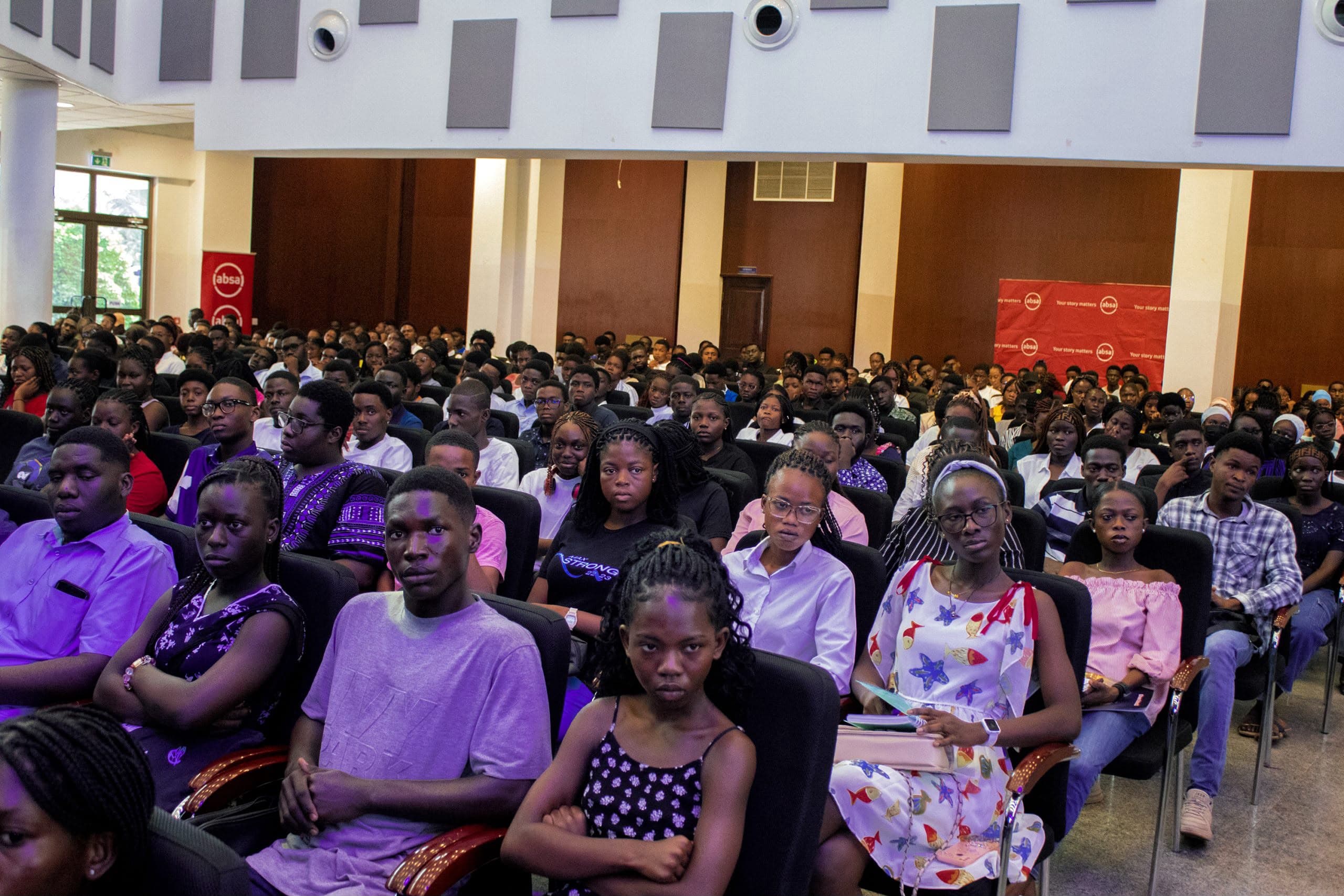
Students are at the heart of every university, yet one question deserves more attention: How much influence do students really have on decisions that ...
Opinions
Aug 18, 2026 3 min read
Embracing the uncertainty of your 20s
Your 20s are often presented as the time when you should have everything figured out; your career, finances, relationships, purpose, and future. Socia...

Opinions
Aug 12, 2026 3 min read
Raising a child out of wedlock: is it really easy?
Raising a child is a major responsibility, whether the parents are married or not. However, raising a child out of wedlock can come with additional ch...