
Opinions
Why learning in the classroom feels more like a burden than a privilege
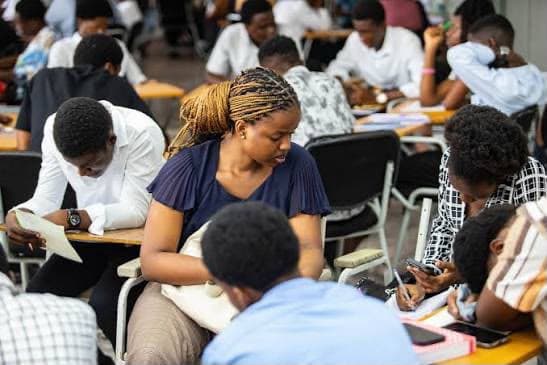
"Education is not the filling of a pail, but the lighting of a fire." - William Butler Yeats
Modern education has become heavily tied to grades, deadlines, competition, and the fear of failure. Instead of asking, "What did you learn?" society now asks, "What did you score?" This shift has slowly transformed learning from a meaningful journey into a tiring obligation.
You open your laptop to study and spend forty minutes staring at the screen without reading a single line. You attend lectures, but it feels like nothing really stays in your mind. You submit assignments not because you truly understand, but simply because the deadline arrived. You look at peers who seem to be doing well academically and begin to wonder what is wrong with you and why you cannot love learning the way you used to.
There was once a time when learning was seen as a privilege, an opportunity many people could only dream of having. Today, however, countless students walk into classrooms, lecture halls, and online sessions feeling exhausted rather than excited. What was meant to inspire growth now often feels like pressure, stress, and survival.
Many students no longer study because they are curious. They study because they are afraid; afraid of disappointing their parents, losing opportunities, repeating courses, or falling behind their peers. The emotional weight attached to academic performance has made education feel less like empowerment and more like a constant race with no finish line.
For students who are the first in their families to attend university, or those carrying the visible weight of family expectations, the burden feels even heavier. Every grade feels like it belongs to more people than just you. Failure is no longer personal; it feels collective. The fear is not only about disappointing yourself, but also about confirming a doubt someone may have quietly held about whether you were capable of succeeding at all.
Social media has also intensified this pressure. Every day, students are exposed to success stories, achievements, scholarships, distinctions, and seemingly "perfect" academic lives online. While these stories may inspire some people, they can also make others feel inadequate. This culture of comparison creates the false impression that struggling means failing, when in reality, struggle is a natural part of growth. A student who feels supported learns differently from one who constantly feels pressured.
Another reason learning feels burdensome is the lack of connection between education and real life. Students often memorize information simply to pass examinations, only to forget everything afterward. This does not mean learning itself is the problem. The real issue lies in how learning is experienced. Education should encourage creativity, critical thinking, curiosity, and personal development, not only memorization and competition.
Teachers, parents, educational institutions, and even students themselves all play a role in changing this reality. Students need environments where mistakes are treated as part of the learning process rather than proof of failure. They need encouragement, mentorship, mental health support, and constant reminders that their worth is not defined entirely by grades. It is equally important for students to rediscover personal meaning in education.
Shifting the narrative
The narrative around education must change. Success should no longer be measured only by grades, rankings, or academic titles. True education should focus on growth, innovation, understanding, and the ability to impact society.
Students should be encouraged to ask questions, explore ideas, make mistakes, and learn at their own pace. Educational systems must create spaces where mental well-being matters just as much as academic achievement. Learning should inspire confidence, not fear.
We must also normalize conversations about burnout, stress, and academic pressure. Students need encouragement, mentorship, mental health support, and reminders that their worth extends far beyond academic performance.
Education remains one of the most powerful tools for personal and societal transformation. It has the ability to open doors, create opportunities, and shape futures. But when learning becomes associated only with pressure and exhaustion, its true purpose begins to fade.
Learning should not only be about certificates or academic validation. It should also be about gaining knowledge, understanding the world, developing skills, and becoming better individuals.
Related Stories & Campus Highlights
View All in Opinions →
Opinions
Aug 29, 2026 3 min read
Behind the slogan: how UPSA prepares students for corporate Ghana
The University of Professional Studies, Accra (UPSA) proudly bills itself as the "Face of Professionalism." But is this a genuine reflection of what t...

Opinions
Aug 27, 2026 3 min read
Beyond the suggestion box: is the student voice really being heard?
Students are at the heart of every university, yet one question deserves more attention: How much influence do students really have on decisions that ...
Opinions
Aug 18, 2026 3 min read
Embracing the uncertainty of your 20s
Your 20s are often presented as the time when you should have everything figured out; your career, finances, relationships, purpose, and future. Socia...

Opinions
Aug 12, 2026 3 min read
Raising a child out of wedlock: is it really easy?
Raising a child is a major responsibility, whether the parents are married or not. However, raising a child out of wedlock can come with additional ch...